
Branding company is a term for a professional team that helps a business define how it wants to be understood, what sets it apart, and how that identity should appear across customer interactions. Its work may include audience research, positioning, messaging, visual identity, and guidelines that help people use the brand consistently.
The need for this work often becomes clearer as a business grows. A company may have loyal customers but use different product descriptions on its website and in sales presentations. A new branch may create its own promotional materials because there is no shared guidance. A capable team may struggle to explain its value to customers outside its existing network. These issues require decisions about strategy and communication, followed by a practical way to put those decisions into use.
What should you expect from a branding company? How can you tell whether a proposed project addresses your business problem? This guide explains the typical services, working process, and seven questions to consider before choosing a partner.
Branding company membantu bisnis menentukan bagaimana brand ingin dikenal, apa yang membedakannya dari kompetitor, dan bagaimana identitas tersebut diterapkan dalam komunikasi sehari-hari. Pekerjaannya dapat mencakup riset audiens, perumusan positioning, pengembangan identitas visual, penyusunan pesan, hingga pembuatan panduan brand.
Kebutuhan tersebut sering muncul ketika bisnis mulai berkembang. Produk sudah memiliki pelanggan, tetapi tampilan kemasan berbeda dengan website. Tim penjualan menjelaskan keunggulan produk dengan cara yang tidak sama dengan tim pemasaran. Cabang baru memakai materi promosi sendiri karena belum tersedia panduan bersama. Dalam situasi seperti ini, persoalannya tidak selalu selesai dengan mengganti logo. Bisnis perlu menyepakati arah brand, lalu menerapkannya di setiap titik interaksi dengan customer.
Lalu, apa yang sebenarnya dikerjakan branding company? Kapan bisnis perlu bekerja sama dengannya? Bagaimana cara menilai apakah sebuah partner memahami kebutuhan Anda? Artikel ini menjawab pertanyaan tersebut sekaligus memberikan tujuh tips praktis sebelum Anda memulai proyek branding.
A branding company helps organizations develop and manage the identity of their brand. The exact scope depends on the business. A new venture may need help defining its audience and positioning. An established company may already understand its direction but need a clearer visual system and guidance for multiple teams.
A brand involves more than its name and appearance. The American Marketing Association describes identity, values, and perception as important parts of how a brand is established and differentiated in a market. These ideas affect how a business presents its offer and how customers understand it. American Marketing Association
Imagine a business that wants clients to experience it as a straightforward and dependable partner. That intention may shape its website navigation, proposal language, service explanations, response process, and presentation style. Its logo helps identify the business, but the customer forms an opinion through many interactions.
The branding company’s job is to connect these choices. It learns about the business and its audience, identifies the decisions that need to be made, and develops a system the organization can use. A useful result should make sense to leadership and be practical for employees, agencies, and vendors who apply it later.
These partners can offer overlapping services. The clearest distinction is the main question each project is meant to address.
Partner | Main question | Possible deliverables |
Branding company | How should the business be understood and differentiated? | Brand strategy, identity, messaging, guidelines |
Design studio | How should a communication need be expressed visually? | Logo, packaging, digital and print assets |
Marketing agency | How can the message reach an audience and support marketing goals? | Campaigns, advertising, channel management, reporting |
These are general descriptions, not fixed boundaries. A branding company may design assets and support campaigns. A marketing agency may have a strong brand strategy team. Review the proposed work and the people who will carry it out instead of relying on the label alone.
If a business has not agreed on its audience or key message, starting immediately with visual design can lead to attractive options that lack a shared purpose. If its strategy and identity are already well defined, a campaign or channel problem may be the more urgent priority. A good initial discussion should help identify the order of work.
A new business may need support before launch. It must decide whom it serves, how its offer differs from other options, and how to express those choices through a name, message, and identity. A clear foundation can guide early decisions about its website, sales materials, packaging, and social channels.
An established business may face a different challenge. New products, locations, team members, and vendors can introduce inconsistent materials. Customers may receive different explanations depending on whom they ask. Guidelines and messaging can help everyone work from the same understanding.
Other reasons include entering a new market, changing the target audience, bringing several services under one identity, or preparing for a rebrand. Each situation requires a closer look at what has changed. A refreshed logo alone may not resolve a problem rooted in the offer or the way it is explained.
Customer and employee feedback can reveal where help is needed. If prospects repeatedly ask what makes the business different, its positioning may need work. If staff cannot produce a presentation without improvising the visuals, the organization may need a more usable identity system.
A project often begins by reviewing existing materials, interviewing stakeholders, studying customers, and examining how competing businesses communicate. The aim is to understand the gap between how the organization wants to be perceived and what its current interactions may communicate.
Research does not always require a large study. A focused review of customer questions, sales objections, website content, and existing assets can reveal useful patterns. What matters is that the team can explain how its findings informed its recommendations.
An audit should also identify what already works. The business may have a message customers respond to, a recognizable visual element, or a service experience worth preserving. Branding work becomes stronger when it develops useful strengths as well as addressing weaknesses
Brand strategy defines the intended audience, the value offered, the position sought in the market, and the ideas that should guide communication. Positioning helps the business explain why its offer matters to a particular group of people.
A strategy should support decisions beyond a single presentation. Can the sales team use it to explain the offer? Can the marketing team decide which benefit deserves attention in a campaign? Can the business assess whether a new product fits its direction? If the answer is unclear, the strategy may need to be made more practical.
Verbal identity covers the way a brand speaks and explains itself. It may include a name, key messages, terminology, and tone of voice. Visual identity includes elements such as the logo, colors, typography, graphic system, and photographic direction.
These elements need to support the same idea. A brand that wants to be approachable should examine both the language customers read and the way its materials look. A design choice should have a reason connected to the audience and business, not simply follow a current visual trend.
A brand book or guideline explains how to apply the identity. It may contain logo rules, color references, type styles, sample layouts, tone of voice guidance, and examples of appropriate use. This becomes especially useful when several departments or vendors produce materials.
The best guidance matches the work the business actually does. A company that frequently prepares proposals may need presentation examples. A consumer brand may need packaging and social content examples. Ask whether the document will help people make routine decisions without repeatedly returning to the original design team.
After the strategy and identity have been approved, they need to appear in customer-facing materials. Implementation may involve a website, company profile, sales deck, packaging, social channels, or launch materials, depending on the project agreement.
Confirm which parts the branding company will produce and which parts will be handled by internal teams or other vendors. The handover should include usable files, clear instructions, and an agreed process for questions. Implementation determines whether the work becomes visible and useful beyond the project presentation.
The process usually starts with a briefing. The business shares its goals, challenges, customers, products, and constraints. The branding team identifies what it needs to learn before recommending a direction.
Next comes research and diagnosis. This stage examines the current brand, customer experience, communication materials, and market context. The outcome should be a clear statement of the problem to solve. Without it, concept reviews can become debates about individual preferences.
The team then develops strategy and identity concepts. Each proposed direction should include the thinking behind its messages and visual decisions. Business stakeholders review the work, provide feedback, and approve a direction for further development.
Finally, the project moves through refinement and handover. Ask what files, guidelines, and explanations your team will receive. Agree on review stages, revision limits, decision-makers, and timelines at the start so the work can progress without avoidable confusion.
Considering a new brand direction or an identity refresh? Discuss your needs with Melon Branding on WhatsApp. Share your goals, current challenges, and the brand materials you already have.
Describe the situation in plain terms before asking for a proposal. “Prospects do not understand how our services differ” is more informative than “we need better branding.” “Our branches keep producing inconsistent materials” points to a different kind of project.
A specific problem gives potential partners something concrete to respond to. It also helps your team determine whether their recommendations address the real issue or simply repeat a standard service list.
A portfolio reveals creative quality, but finished visuals tell only part of the story. Ask about the client’s original challenge, the reasoning behind the work, and the deliverables produced. A project with restrained visuals may still show excellent strategic judgment.
Industry experience can help, but it is not the only useful comparison. A partner that has successfully clarified a complex service offer may understand a B2B challenge even if its previous client worked in another sector.
Ask what the team intends to learn about your customers, competitors, business model, and current communications. A partner should be able to explain how it will move from observations to recommendations.
Research should fit the project’s size and purpose. More interviews or larger reports do not automatically lead to better decisions. Look for a sensible method and a clear connection between evidence and the proposed direction.
Terms such as “brand identity” and “brand guideline” may mean different things in different proposals. Request a detailed list. Does the work include positioning, messaging, logo variations, editable files, usage rules, and examples for the channels your team uses?
Ask who will apply the identity after handover. If another team is responsible for the website or packaging, it will need the appropriate assets and guidance. Clear deliverables make proposals easier to compare and help prevent misunderstandings later.
A good partner can explain why it recommends a particular message, visual system, or approach. The explanation should connect customer needs and business goals to the proposed work. It should be understandable without requiring your team to learn design terminology.
This matters when opinions differ. Decision-makers may have preferences, and the creative team may see things differently. Research findings and project goals give both sides a productive basis for discussion.
Find out who will be your main contact, when feedback is needed, and how approvals are handled. Branding projects require input from the business, particularly when the team needs to verify product details, customer experience, or internal priorities.
If several stakeholders will review the work, name a final decision-maker. Contradictory instructions can slow the project and weaken the final direction. An agreed process helps the company and its partner use their time well
Two proposals can have different prices because they cover different levels of research, strategy, design, support, and implementation. Compare what the business will receive and how the outputs will be used.
Ask about work that might be needed later, such as additional applications or guideline updates. Understanding the project boundaries helps you budget for implementation and choose a partner based on the outcome you need.
You do not need to arrive with every answer. A useful starting brief includes an overview of the business, key products or services, target customers, growth plans, existing materials, and the problems prompting the project.
Include people who hear customer questions directly. Sales teams may know why prospects hesitate. Service teams may see recurring confusion. Leadership can explain where the organization is heading. These perspectives help a branding company understand both the intended direction and the daily reality of the business.
If the project involves a name, logo, or another element the business may want to protect, raise that topic during planning. WIPO explains that brand elements such as names, symbols, and logos can be relevant to trademark protection. The appropriate checks and steps should be discussed with qualified specialists before a new identity is widely used. wipo.int
Identify who can approve the project’s direction. A clear decision process lets the partner know when feedback is coming and whose approval will move the work to the next stage.
Imagine a custom furniture company that has grown mainly through referrals. It now wants to work with corporate clients and property developers. Its team has strong project experience, but its website, sales deck, and social channels explain that experience in different ways.
A branding company could begin by speaking with the owners, project team, and selected customers. The research might identify which strengths matter most to the new audience, such as a clear project process, material options, or the ability to meet different spatial requirements.
Those findings would inform the positioning and key messages. The visual identity could then be refined for use across the website, proposals, and project portfolio. A guideline would help staff and vendors prepare new materials without repeatedly guessing how to use the brand.
This is an illustrative scenario, not a claim about a real project. The important change is the connection between the business’s capabilities, the needs of its intended clients, and the information those clients encounter.
Begin with the problem the project was meant to solve. If the challenge was inconsistent materials, examine whether internal teams and vendors can apply the new identity correctly. If prospects struggled to understand the offer, review whether the website, presentations, and sales conversations now explain it more clearly.
Useful indicators may include recurring prospect questions, the quality of inquiries, consistency across channels, and feedback from employees using the guidelines. A short review after implementation can reveal which parts of the system work well and where additional examples are needed.
Sales and growth are influenced by many factors, including the offer, pricing, distribution, customer experience, and marketing activity. Avoid attributing every change to a single branding project. Evaluate the work against the decisions and communication problems it was designed to address.
Melon Branding’s brand strategy services cover audience and competitor research, positioning, and communication direction. Its brand development services include visual identity, brand identity, and brand book options. The appropriate scope depends on the business’s current position and priorities. MELON
An initial conversation can focus on what needs to change and where the new direction will be used. That makes it easier to decide whether the immediate need is strategy, identity development, practical guidelines, or a combination of these services.
It can, particularly when it needs to clarify its audience, offer, or identity before expanding its marketing. The project can focus on the most urgent decisions rather than covering every possible branding service.
No. Logo design can be part of the work, but the scope may also include research, positioning, messaging, identity systems, and guidelines for consistent use.
Consider a rebrand when the business direction, audience, or offer has changed and the current identity no longer explains it well. Diagnose the underlying issue before deciding how much needs to change.
Brand strategy defines the audience, position, and value the business intends to communicate. Brand identity expresses that direction through recognizable verbal and visual elements.
A brand book becomes particularly useful when multiple people or vendors create materials. Its level of detail should match the organization’s size, channels, and practical needs.
A branding company helps a business align strategy, identity, and implementation. The work is most useful when customers can understand the offer more easily and internal teams have a clear basis for making communication decisions.
Before choosing a partner, define the problem, examine its research process, confirm the deliverables, and agree on how your teams will work together. Those steps make it easier to invest in work your business can actually use.
Want to discuss the right direction for your brand? Contact Melon Branding on WhatsApp.
Dapatkan brand book yang konsisten dan strategi komunikasi yang tepat untuk bisnis Anda.
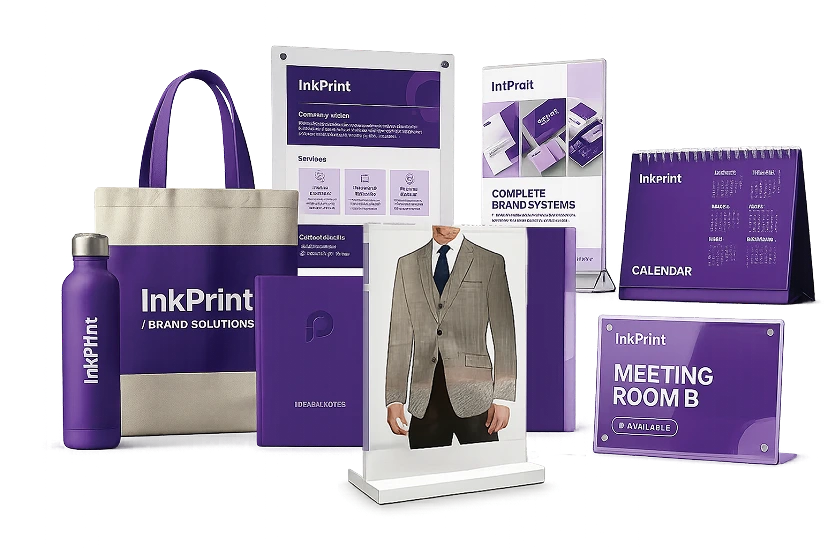
Cetak kartu nama, packaging, merchandise, dan perlengkapan promosi sesuai kebutuhan bisnis Anda.