
A branding agency in Indonesia helps businesses define their direction, build a recognizable identity, and apply it consistently across customer touchpoints. A company might seek this support before launching, when entering a new market, or when its current presentation no longer reflects the quality of its products and services.
Searching for “branding agency Indonesia” will bring up plenty of options. The important decision is finding a team that understands your business and can explain how its work will be used. An attractive portfolio is a useful starting point, but you also need to understand the agency’s research process, how decisions are made, what you will receive, and how your team will use the results. This guide gives you a practical way to evaluate those questions.
A branding agency helps a business develop its brand strategy, identity, and guidance for implementation in the markets it serves. Depending on the project, its work may involve audience research, competitor analysis, positioning, visual identity, brand messaging, a brand book, and support as the new direction is put into practice.
The location of an agency does not determine a single method or set of deliverables. A business serving customers across several Indonesian cities, for example, may need a consistent identity with enough flexibility for local communication. A company expanding internationally may need to check whether its name, message, and visual language remain clear in different languages and cultural contexts.
Branding goes beyond logo design. A logo is one part of a visual identity. Questions about whom the business serves, what it offers, how it differs from competitors, and how it communicates its value require a broader discussion. That does not mean every project needs every service. The right scope depends on the problem the business is trying to solve.
There is no fixed revenue threshold or company size that makes agency support necessary. A better signal is an important brand decision that cannot be resolved by changing a few design assets.
A new business needs to clarify its target audience, place in the market, name, and main message before translating that direction into a visual identity. Without this sequence, a team may choose colors and a logo before it knows what the brand needs to communicate. An agency can help establish the reasoning behind those choices so launch materials serve a clear purpose.
A formal website, casual social posts, and sales materials using an older identity can make one business feel like several different brands. This often happens when multiple teams or vendors create materials at the same time. An agency can review what already exists, decide which elements remain useful, and develop guidelines that everyone can follow.
Expansion, a new product line, or a shift in the customer base can make an existing identity less relevant. Updating a brand does not always require a complete redesign. The business may need clearer positioning, a revised message, or a more flexible visual system that can support new offers and channels.
A rebrand should address a defined business need, such as a change in the operating model, an outdated perception, or a need to bring several services under one identity. An agency can help identify what customers already recognize and which parts need to change. That balance matters when the business wants existing customers to recognize it after the transition.
Agencies package their work differently. Instead of comparing package names, compare the problem each proposal addresses, the stages of work, and the deliverables you will receive.
Strategy addresses the fundamental questions: Who is the priority audience? What need does the business meet? Which strengths can it substantiate? What position does it want to hold in the market? The process may include conversations with founders and staff, a review of existing materials, and research into customers and competitors. Deliverables may include positioning, brand personality, key messages, and a communication direction.
A useful strategy should guide real decisions. If a business claims to be easy to work with, that quality should be visible in its website copy, contact options, and the clarity of its service information. A positioning statement that sounds impressive in a presentation but cannot be reflected in the customer experience will be difficult to sustain.
Identity makes the strategy recognizable. Its visual elements may include a logo, colors, typography, photography, illustrations, layouts, and examples of use. A broader brand identity may also define personality and communication style. When reviewing a concept, ask how those choices serve the audience and business position, rather than judging the design only by personal taste.
Discuss the final files before the project begins. Check which logo variations, formats, usage rights, and application examples are included. A concept that looks excellent on an agency presentation may still need to work on product packaging, a mobile screen, a sales proposal, and a storefront sign.
A brand book documents how to use the identity so the team does not have to improvise each time it creates a new asset. It can cover logo clear space and minimum sizes, color codes, typography, image style, tone of voice, and examples of correct and incorrect applications. For a company with several departments or vendors, it becomes a shared reference after the design project ends.
Practical guidelines should also answer operational questions. Where are approved assets stored? Which templates should staff use? Who decides how to handle an application the guide does not yet cover? These details turn the brand book into a working tool instead of a document that sits in a folder.
Some agencies also support implementation through a website, social media, campaign materials, or publicity. Those activities should follow the agreed strategy, with measures that suit each objective. For an awareness campaign, the team may monitor reach and whether the audience understands the message. For a service page, the focus may be on clear information, user experience, and relevant visitor actions.
More services do not automatically make an agency a better fit. A company with an established digital team may need strategy and identity guidelines only. Another may need support across development and ongoing implementation. Clarify who is responsible for each part early so important work does not fall between teams.
Unsure whether your business needs a new strategy, a visual identity, or a brand book? Discuss your brand with Melon Branding on WhatsApp. Sharing your current challenges can help define a scope based on what your business needs.
Agencies may use different names for each stage, but a clear process shows when you need to supply information, review work, and make decisions. Ask prospective partners how they handle the following steps.
The agency should understand why the project is starting, what the business is struggling with, who it wants to reach, and what decisions the work should enable. The initial agreement should cover deliverables, timelines, rounds of revision, decision makers, and materials the client must provide. A clear brief reduces the chance of a major change of direction midway through the project.
The team may review current communication, study the audience, and examine how competitors present themselves. Research methods depend on the project’s needs and resources. Customer interviews, reviews, digital channel analysis, and conversations with sales staff can each reveal different insights. Ask the agency to explain where its findings come from and what remains uncertain.
Research findings should lead to choices about the priority audience, positioning, key messages, personality, and intended experience. At this stage, the business needs to assess whether the proposed direction matches what its products and operations can deliver. A strong strategy helps the team decide which strengths to emphasize and which promises it cannot yet make.
The visual system and communication style should follow the approved direction. Ask to see examples in formats the business actually uses, not just a single polished mockup. A company with multiple locations, for example, may need to consider signage, uniforms, local materials, and mobile screens. Feedback is more useful when it refers to agreed goals instead of opening another debate about individual preferences.
Beyond design files, check the usage guidelines, whether your team can open the supplied formats, and how assets are organized. Ask whether the agency will walk internal staff through the system and how it handles questions after delivery. This handover affects whether the identity remains consistent when the agency is no longer producing day-to-day materials.
Start with the needs of your business, then evaluate potential partners using criteria you can verify in their proposals and conversations.
Look at previous projects, but ask about their context. What challenge did the client face? Why was a particular approach chosen? What was delivered? If the agency shares measurable results, ask when they were measured and what other factors contributed. Experience in your industry can be helpful, but the ability to understand a new problem matters too.
Rigorous research does not always require a large survey. What matters is whether the agency can explain how it reached an insight and why the recommendation fits your business. Ask whom it plans to interview, what data is available, and which ideas are still assumptions. Specific answers help you assess the process behind a proposed design direction.
Find out who is responsible for strategy, design, and project management. Agree on a clear route for communication and regular review points. If several people in your company must approve work, appoint one person to consolidate feedback. Otherwise, conflicting instructions can slow decisions and leave the agency without a clear direction.
Two proposals may both promise “brand identity” while offering very different deliverables. Check whether research, concept options, usage guidelines, editable files, templates, implementation support, and revisions are included. Ask what is outside the scope as well. A useful comparison looks at the work and responsibilities written into each proposal.
A new identity usually appears across customer touchpoints in stages. Ask which assets should change first, who will update them, and how old materials will be handled. This is particularly important when different teams manage the website, sales proposals, packaging, and social media. A practical rollout keeps the new direction from becoming fragmented at launch.
Melon Branding’s portfolio illustrates how the scope changes with the client’s needs. Its Brand Development page describes a rebrand for Kontakami that covered the name, logo and its rationale, graphic elements, tagline, typefaces, and business stationery. That example involves coordinated changes across several parts of the identity.
Its Brand Strategy page presents Prodia OHI as an example of ongoing digital work involving educational social content, SEO, and website management. That need differs from a visual rebrand: the challenge is to maintain a clear communication direction as the brand appears regularly across channels. Both examples show why a project should be scoped after the business challenge has been understood.
It can benefit from one, especially when developing its first identity or entering a new market. A small business does not need the same scope as a large corporation, however. Start with the most pressing decision and choose work your team can implement after the project is complete.
A branding agency helps define a brand’s direction and identity and may support implementation. A design agency often focuses more on creating or developing visual assets. A digital marketing agency generally handles distribution, campaigns, and channel optimization. These responsibilities can overlap, so always examine the specific scope and deliverables in a proposal.
The timeline depends on the project’s scope, available information, number of approvers, and implementation needs. Developing a strategy and comprehensive brand book requires different work from updating a few visual assets. Ask for a schedule showing each stage and the time allocated to feedback and revisions.
No sales result can be guaranteed by a new identity alone. Branding can clarify positioning and improve consistency, but business outcomes also depend on product quality, pricing, distribution, service, and marketing. Agree on measures that fit the purpose of the project, then review them after implementation.
Bring an overview of your business, products or services, existing audiences, current challenges, project goals, available brand materials, and the people who will make decisions. This makes the initial conversation more useful. You do not need every answer in advance; research with the agency can help resolve the questions that remain.
A branding agency in Indonesia can help a business understand its audience, define its strategy, build an identity, and put that identity to work. The most useful results come from a clear problem, a process the agency can explain, and guidelines the team can continue using after handover. Review portfolio work in context, compare deliverables carefully, and make sure there is a plan for implementation.
If your brand is preparing to launch, expand, or find a clearer direction, Melon Branding can help you identify the right priorities. Contact the team on WhatsApp to start the conversation.
Dapatkan brand book yang konsisten dan strategi komunikasi yang tepat untuk bisnis Anda.
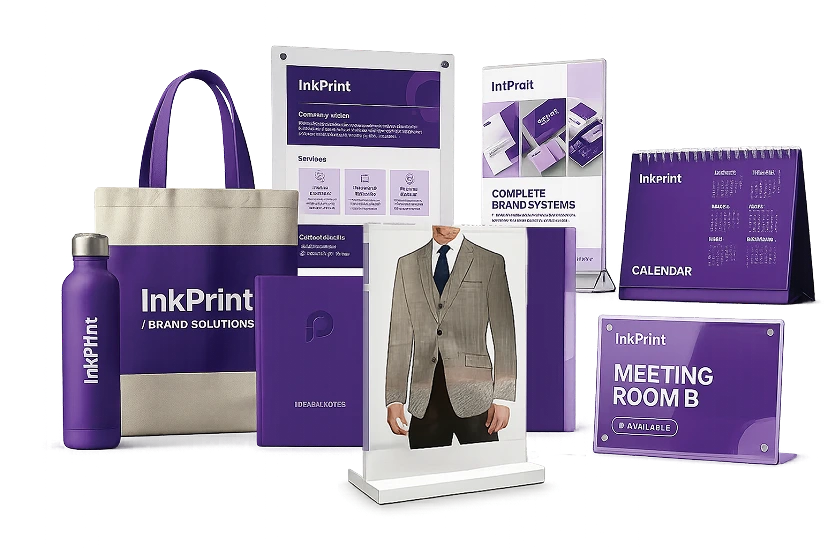
Cetak kartu nama, packaging, merchandise, dan perlengkapan promosi sesuai kebutuhan bisnis Anda.